Blog
Corporate event run of show: a template that keeps the night on schedule
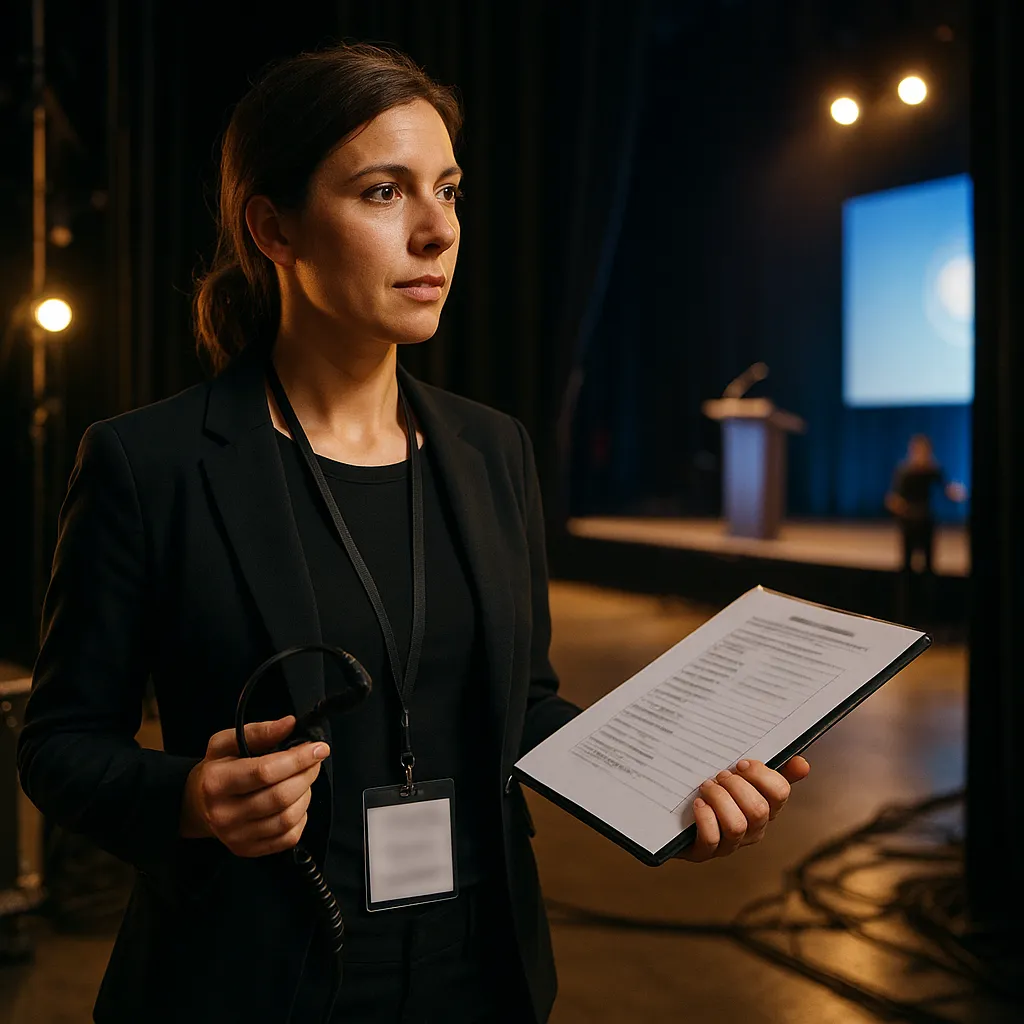
- A run of show is the working document for the people producing the night, not the guest-facing agenda.
- Every line needs a time, an owner, a cue, and a next step. A time without an owner is just a wish.
- For a company party or awards night, build around arrivals, welcome, dinner, speakers, awards, dancing, and the hard stop.
- Give the band or DJ exact music cues and a single person authorized to change them.
Corporate event planning gets stressful when the welcome speech is waiting on dinner, the award recipient is not in the room, and the DJ is ready with the wrong walk-up song. A corporate event run of show gives every person one shared answer to what happens next, who calls it, and what must be ready before it starts.
A run of show is a minute-by-minute production schedule. It turns a broad event agenda into cues: at 7:18, the event lead confirms service is clear; at 7:20, the host walks on; at 7:21, the AV lead opens the microphone and the DJ starts the agreed walk-up music. That level of detail is what keeps the night moving.
What is a run of show in corporate event planning?
Your invitation might say cocktails at 6, dinner at 7, awards at 8, dancing at 9. That is an agenda. A run of show is the backstage version. It tells the people doing the work when doors open, which microphone is live, who finds the next award recipient, when dinner service pauses, and when music starts.
EventsAir recommends a detailed timeline and run sheet that outlines the sequence of events and is shared with staff, vendors, and performers. Cvent similarly calls for an on-site run-of-show document and a non-facilitating point person for surprises. The useful distinction is simple: guests need the experience; the team needs the instructions.
Keep the live version in one place. Print copies for the people who cannot be on a shared document, but do not let five people update five different schedules. One event lead owns the current version.
Who owns each cue?
Many company events go late because the team treats ownership as a group assignment. It is not. One person owns the call, even when several people do the work.
| Role | Owns | Does not own |
|---|---|---|
| Event lead | The master run of show, schedule changes, and the call to move on | Operating the sound system or serving dinner |
| Venue captain | Room readiness, food and beverage timing, tables, and service staff | Changing the program without the event lead |
| AV lead | Microphones, slides, video, lights, and technical standby | Choosing the order of speakers or awards |
| Host or emcee | What the audience hears and the energy in the room | Chasing down a late speaker while onstage |
| Entertainment lead | Music start and stop cues, walk-up music, set changes, and volume | Guessing when an award begins |
| Speaker wrangler | Finding the next speaker or winner, checking pronunciation, and getting them to the stage | Rewriting the program from the hallway |
At a smaller party, one person may hold two of these jobs. That is fine if the jobs do not collide. The host cannot also be the person standing at the loading dock trying to locate the award plaques.
Corporate event run of show template: company party or awards night
Copy this structure, then replace the times, names, and music notes with your own. It assumes guests arrive at 6:00 p.m., dinner begins at 7:00, awards start at 8:00, and the event ends at 10:30. Shift the clock as needed, but protect the order and the handoffs.
| Time | What happens | Owner | Cue and check |
|---|---|---|---|
| 3:00 p.m. | Venue access and vendor load-in | Event lead | Confirm parking, loading route, green room, stage, and the one person who can approve room changes. |
| 4:30 p.m. | AV, host, and entertainment soundcheck | AV lead | Test every microphone, every award slide, walk-up music, and the host’s first line. Put backups where the people using them can reach them. |
| 5:30 p.m. | Team huddle | Event lead | Read the next three hours aloud. Confirm the hard end time, emergency contact, and how schedule changes will be shared. |
| 5:45 p.m. | Doors and registration ready | Venue captain | Check-in staff in place, signs up, bar ready, coat check ready if used, and background music on. |
| 6:00 p.m. | Guest arrival and cocktail hour | Entertainment lead | Start arrival music. The event lead watches registration flow, not the dance floor. |
| 6:45 p.m. | Five-minute call to dinner | Event lead | Confirm with the venue that tables are ready before the host asks guests to move. |
| 6:55 p.m. | Guests seated | Host | Short verbal cue. Background music lowers, but does not vanish until the room is settled. |
| 7:00 p.m. | Welcome and opening remarks | Host | AV opens the host microphone. Keep the welcome to the time actually assigned, not the time someone hopes it will take. |
| 7:10 p.m. | Dinner service | Venue captain | Entertainment shifts to dinner-level music. Event lead confirms the first speaker is present and briefed. |
| 7:40 p.m. | Company message or featured speaker | Event lead | Venue confirms plates are cleared enough for attention. Speaker wrangler has the next person standing by. |
| 8:00 p.m. | Awards begin | Host | For each award: slide ready, winner confirmed, walk-up music named, award in hand, photo position clear. |
| 8:35 p.m. | Final award and group photo | Event lead | Do not start the photo until the host knows exactly where people stand and the photographer is ready. |
| 8:45 p.m. | Dance floor opens | Entertainment lead | Host gives one clean handoff. The band or DJ starts the first dance track or set on the agreed signal. |
| 9:30 p.m. | Optional late-night moment | Event lead | Photo booth reminder, raffle, dessert reveal, or no interruption at all. Decide this before the event, not after the dance floor gets moving. |
| 10:15 p.m. | Last-call announcement and final song plan | Host and venue captain | Confirm bar policy, transportation, and the exact music stop. Give the entertainment lead a five-minute warning. |
| 10:30 p.m. | Event ends | Event lead | Music ends on time. Guests get the exit information. Vendors begin load-out only after the event lead releases them. |
Where the band or DJ fits in the schedule
Entertainment should not be a blank block labeled “music.” Give it specific jobs. Arrival music makes the room feel open before the program starts. Dinner music supports conversation. Walk-up music gives awards momentum. A full dance set belongs after the formal program, when nobody is about to ask the room to sit down again.
A live band and a DJ solve different schedule problems. A band gives the dance portion a live performance and can cover announcements through its microphones. A DJ can switch quickly between walk-up songs, dinner music, and guest requests. The right call comes from the program you actually have, not the label on the event.
For corporate events, Ricky Bobby Music can be booked as the live band, as Ricky Bobby DJ, or in a combined booking. Their event plan should still name every cue, song, and handoff. The band’s PA and microphones are available for announcements, toasts, and speakers; Ricky Bobby DJ can build a set list in advance or work from requests during the event.
Give entertainment a cue sheet, not a mood board
Send this short list before the event:
- The exact start and stop time for arrival, dinner, awards, and dancing.
- Every walk-up song, in award order, with the name of the person who approves a last-minute change.
- The words that signal a music change: “Please take your seats,” “Let’s welcome,” and “The dance floor is open.”
- The microphone plan: who speaks, where they stand, and who hands them the mic.
- Any no-play list, must-play song, volume limit, or hard stop from the venue.
Do not hand the entertainment team a speaker list and expect them to infer the rest. A cue is an instruction someone can act on in the moment.
How to keep speeches and awards from taking over the night
The run of show needs a clock for people who speak. Write the allotted minutes next to every speaker and every award category. Then decide what happens when someone runs long. The usual answer is not “make it up later.” It is a specific cut: skip a video, combine two introductions, shorten the host’s transition, or remove the optional late-night interruption.
For awards, the speaker wrangler is the quiet hero. Before the host reads a name, that person confirms the winner is in the room, knows where to walk, and is not holding a drink they need to set down. Keep the next two people ready. That prevents the small dead spaces that turn a crisp program into a slow one.
Build in recovery time
Put a short buffer before the one moment you cannot move, such as a venue curfew or a scheduled shuttle departure. Do not spend every minute on paper.
Protect the dance portion
Once dancing begins, interruptions cost more than they appear to. Put raffles, group photos, and thank-yous before the handoff whenever possible.
Run-of-show mistakes that make a corporate event feel late
- Using the guest agenda as the production plan. It has no cue owners, technical notes, or recovery plan.
- Putting only one time next to an award block. List the start, each category, and the end. “Awards: 8:00” does not tell anyone what to do at 8:17.
- Letting every stakeholder edit the schedule. Collect input, then put one person in charge of the final version.
- Calling guests to dinner before the venue is ready. Once the host asks people to sit, the event has made a promise. Confirm service first.
- Giving music cues by memory. Write them down, including the backup choice if a speaker is absent or an award is skipped.
- Forgetting the end. The schedule needs a final song, lights-up, transportation note, vendor release, and load-out plan. An event does not end when the last speech does.
Common questions
What is a corporate event run of show?
It is the working schedule for the people producing the event. It lists the exact time, action, owner, cue, and often the backup plan for each part of the night. It is more detailed than the agenda guests see.
Who should own the run of show?
The event lead or producer should own the master document and approve changes. The venue, AV team, host, and entertainment team each own their cues, but they work from the same current version.
When should a band or DJ start at a corporate party?
Use entertainment at several levels: lower-volume music during arrivals and dinner, specific walk-up cues during awards, then the main dance set after the formal program is finished. The schedule should state each change plainly.
How detailed should a run of show be?
Detailed enough that a person who did not write it can carry out the next cue. For each line, include time, action, owner, technical or music cue, and any condition that must be true before the event moves on.
Sources
- EventsAir, “Conference & Event Planning Checklists.” Recommends a detailed timeline and run sheet that outlines the sequence of events and is shared with staff, vendors, and performers. Accessed October 7, 2026. eventsair.com
- Cvent, “How to Plan a Team Offsite: A Step-by-Step Guide.” Recommends building an on-site run-of-show document and naming a non-facilitating point person for surprises. Accessed October 7, 2026. cvent.com