Blog
How to plan a party: the checklist and timeline
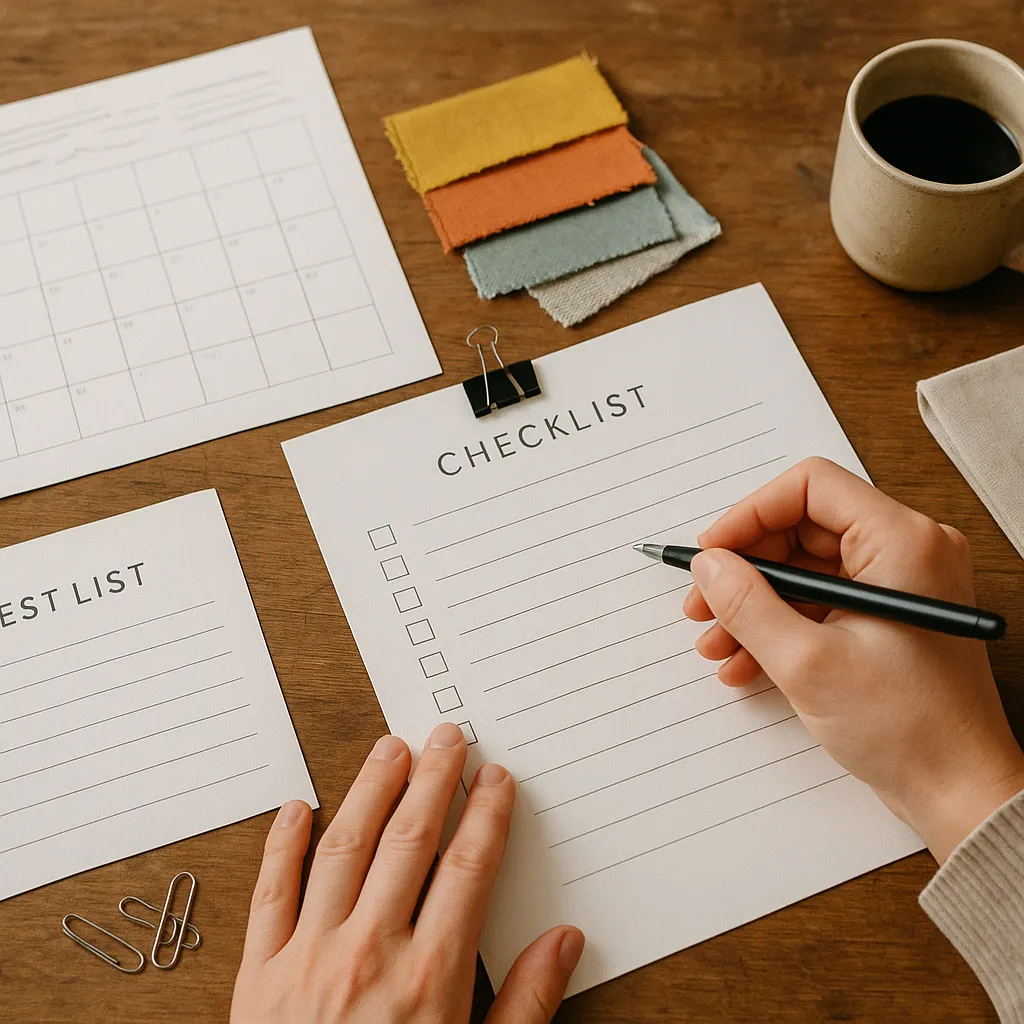
- Start with five decisions: the reason for the party, date, budget, guest count, and venue.
- Book the things that can disappear first: the space, food, and entertainment.
- Before you confirm music, ask the venue about load-in, power, sound limits, rain plans, and end time.
- Give every important moment a time and one person responsible for it.
- On party day, protect the first hour. That is when guests arrive, vendors finish setup, and small problems are easiest to solve.
Planning a party gets hard when every decision seems connected to every other decision. The fix is not a longer to-do list. It is putting the decisions in the right order: decide what the party is, get the room and guest count right, then build food, drinks, music, and timing around those two facts.
The short answer: plan a party by locking the purpose, date, budget, guest count, and venue before you book anything else. Then book entertainment early enough that it can shape the sound, power, setup, and schedule instead of becoming a last-minute problem.
Party planning checklist: start here
Open one shared note or spreadsheet. Put these answers at the top. They become the brief you give the venue, caterer, entertainer, rental company, and anyone helping you host.
| Decision | What to decide | Why it comes first |
|---|---|---|
| Purpose | Birthday, engagement, reunion, holiday party, fundraiser, company gathering, or just a reason to have people over. | It sets the tone, guest mix, and how formal the night needs to be. |
| Date and hours | Pick a date, a start time for guests, and an end time for the room. | Every vendor needs this before they can tell you what is possible. |
| Budget | Choose a total ceiling, then reserve money for the parts that matter most to you. | It keeps a nice idea from turning into ten unplanned add-ons. |
| Guest count | Make an A list, then identify the number you can actually host comfortably. | Food, seating, drinks, parking, sound, and venue size all follow from this number. |
| Venue | Home, backyard, restaurant room, bar, event space, park, or another rented location. | The venue decides the rules you have to work inside. |
Set aside a small contingency before you begin assigning dollars. It is for the thing you did not know you needed: extra ice, another table, a rideshare home for someone, or a weather backup. Do not use it to make the first version of the plan prettier.
Timeline for planning an event: twelve weeks to party day
Use the longest clock your party allows. A large event, a popular date, a venue with paperwork, or entertainment you care about deserves more lead time. A backyard birthday for close friends can move faster. The order stays the same.
| When | Your job |
|---|---|
| 8 to 12 weeks out | Set the purpose, budget, date, guest-count range, and venue. Start a guest list. Book entertainment if it is a priority. |
| 6 to 8 weeks out | Send invitations. Decide food and drinks. Confirm what the venue provides and what you must bring. |
| 3 to 4 weeks out | Count likely guests, order rentals or decorations, choose the music plan, and write the first run of show. |
| 1 to 2 weeks out | Get final counts, confirm every vendor in writing, check access and parking, and assign day-of jobs. |
| 2 to 3 days out | Buy nonperishable supplies, make a packing list, confirm arrival windows, and share the final schedule. |
| Party day | Set up, test the practical things, welcome guests, and let the plan do its work. |
How to make a party budget that does not drift
Give every dollar a job before you start shopping. The exact split changes by party, but these are the categories to price:
- Venue, permit, or reservation fee
- Food and drinks, including ice, serving supplies, and gratuity where appropriate
- Entertainment and production
- Tables, chairs, linens, tents, or other rentals
- Decorations, flowers, cake, favors, or activities
- Transportation, parking, security, or cleanup
- Contingency
Choose your non-negotiables before you compare quotes. If the point is a packed dance floor, protect the music budget. If it is a dinner with family, put the money into food and a room where people can hear each other. A good party plan makes one clear promise and spends toward that promise.
Choose a venue after you know your real guest count
Do not choose a venue based only on how it looks empty. Ask how many people can eat, stand, dance, use the restroom, and move through the room at the same time. Then ask what the room needs from you.
Venue questions to ask before you sign
- What time can vendors load in, set up, and strike?
- Where can guests park, get dropped off, or call a ride home?
- What furniture, tables, chairs, lighting, kitchen access, and cleanup are included?
- Where can food be served, drinks be stored, and trash go?
- Where can entertainment set up, and how much clear space is there?
- What power is available near the performance area?
- What are the sound rules, curfew, rain plan, and cancellation terms?
For party planning in Austin, TX, do not assume that a backyard rule applies to a commercial venue, park, or event space. The City of Austin says commercial and non-residential places using outdoor sound equipment need a permit, and city parks have their own permit rules for amplified sound. Confirm the rule with the venue before you book a band, DJ, speakers, or lighting. The City of Austin’s outdoor amplified sound guidance is the place to start.
Book entertainment before it becomes a logistical problem
Entertainment is not just a line on the party planning checklist. It changes the room. A live band needs a performance area, power, a load-in route, and a sound plan. A DJ needs a place for speakers and guests’ requests. Karaoke needs a screen, microphones, a host position, and enough room for people to gather without blocking dinner or the bar.
Ask the entertainer four practical questions: What time do you arrive? What space and power do you need? What do you bring? Who is the one person on site who can make a decision if the plan changes? Put the answers in the run of show, not just an email thread.
Live music
Decide if the band plays while people arrive, after dinner, or across the full night. Leave a clear path for load-in and a place where the audience can gather without bottlenecking the room.
DJ or karaoke
Make one person the request filter. That keeps every guest request from turning into a new conversation with the host.
For a private party in Austin, Ricky Bobby Music’s private-party options include the live band, DJ, karaoke, and combinations of those offerings in one booking. See all services when you are deciding what the night needs, then send the date, venue, guest count, and schedule through the booking form.
Build the guest list, invitation, food, and drink plan together
Your guest count is an estimate until people respond. Track three numbers: invited, yes, and likely. Do not wait until the final week to learn that an open invitation changed a 25-person dinner into a 50-person party.
Your invitation should answer the questions that make people text you later: date, start and end time, exact location, parking or rideshare note, dress expectation, whether food is served, and how to RSVP. If the party has a surprise, say what guests need to know without giving it away.
Match food to the format. A seated dinner requires a seating and service plan. A come-and-go party needs food that can sit out in small refreshed batches. A party built around a show or toast needs a pause in food service so guests are not stuck at the buffet during the one moment you wanted them together.
Using this as a wedding reception checklist
The same party planning order works for a reception: lock the venue, guest count, meal, music, and run of show before choosing details. For the music-specific decisions, use the wedding service page alongside this checklist. A DJ checklist for a wedding should also cover setup space, power, introductions, dinner music, the dance floor, and the final song.
Write a simple day-of run of show
A run of show is just the order of the day, with names next to the jobs. It prevents the host from becoming the only person who knows where the ice is, when the cake arrives, or what happens after the toast.
| Time | What happens | Who owns it |
|---|---|---|
| 3:00 p.m. | Venue access, rentals, food delivery, and decorating begin. | Setup lead |
| 4:30 p.m. | Entertainment arrives, loads in, and tests sound. | Venue contact and entertainment lead |
| 5:30 p.m. | Final room check: lights, music, restrooms, trash, ice, signs, and entrance. | Host’s second-in-command |
| 6:00 p.m. | Guests arrive. Keep the first 30 minutes easy: drinks, food, and music. | Greeter and host |
| 7:00 p.m. | Main food service, activity, toast, or announcement. | Program lead |
| 8:00 p.m. | Music, dancing, karaoke, games, or the main social part of the night. | Entertainment lead |
| 30 minutes before end | Last call, final song, favors, rideshare reminder, and cleanup handoff. | Host’s second-in-command |
The times above are a template, not a law. Keep buffers around arrivals, food, and any moment that requires all guests’ attention. If one part runs late, cut an optional piece instead of rushing the part people came for.
What to check on party day
- Text or call each vendor to confirm arrival time, entrance, parking, and on-site contact.
- Walk the room as a guest would: entrance, bathroom, bar, food, seating, and exit.
- Test power, lights, microphones, and the music setup before guests arrive.
- Put water, ice, trash bags, tape, scissors, phone chargers, and a basic first-aid kit where the team can find them.
- Keep the schedule with the person making decisions, plus the venue and entertainment leads.
- Pick one person who is not the host to solve small problems.
Then stop planning. A party works when people feel looked after, not when they can see every line of the spreadsheet behind it.
Common questions about planning a party
What are the first things to do when planning a party?
Decide the purpose, date, budget, guest-count range, and venue. Those five decisions control nearly every later choice, including food, entertainment, and the schedule.
When should I book entertainment for a party?
Book it after the date and venue are real, and before you build the room layout and run of show. Entertainment affects power, sound, load-in, space, and the timing of the night.
What should be in a party run of show?
List vendor arrival, setup, guest arrival, food, any toast or activity, entertainment, the last 30 minutes, and cleanup. Put one person’s name next to each task.
What should I ask a venue before planning live music or a DJ?
Ask about setup space, power, load-in route, sound limits, curfew, rain plan, and when vendors can arrive. In Austin, also confirm the venue’s outdoor amplified-sound rules before you book.
Sources
- City of Austin, “Outdoor Amplified Sound.” Guidance on outdoor amplified sound permits for commercial and non-residential locations, plus residential sound limits. Accessed October 7, 2026. austintexas.gov
- City of Austin, “Reserve a City of Austin park space.” Park reservations and permit requirements, including amplified sound. Accessed October 7, 2026. austintexas.gov
Venue rules and permits can change. Confirm the requirements for your specific location before you book or promote an event.