Blog
What does a live band play during a wedding ceremony?
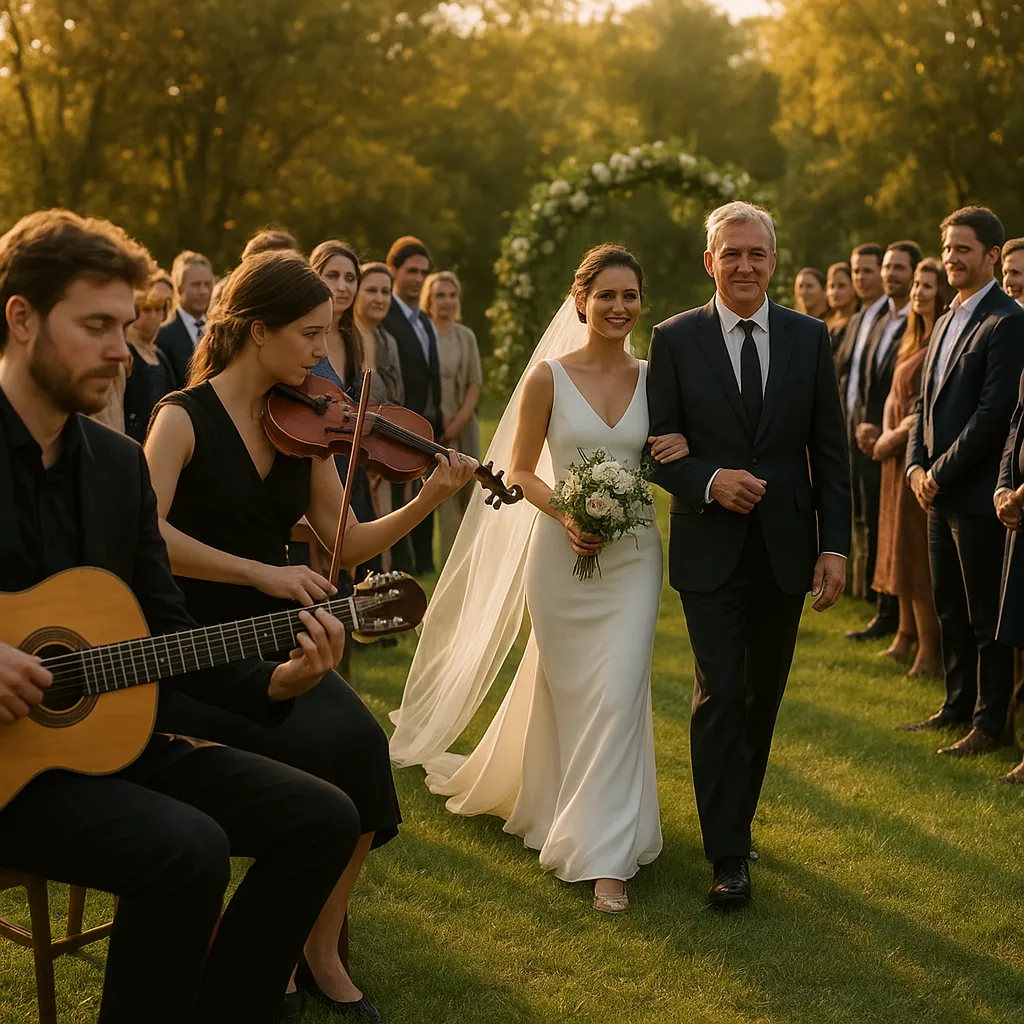
- Four cues run a ceremony, not a playlist: seating, the processional, the moment, the recessional.
- A live musician can extend or cut a song as needed. A recording can’t adjust, and the trip down the aisle never takes the amount of time you expect.
- When a musician doesn’t know your song, the standard advice is an instrumental version. There’s a better choice.
- The only real limit is lead time. Share your songs and where they belong in the ceremony early, and most things are possible.
Ask a band for their ceremony songs and they’ll give you a song list. That answer misses the mark. A ceremony doesn’t call for a playlist; it calls for music at four fixed moments, and just one of those has a length you can predict.
The Knot says wedding ceremony music programs involve a minimum of three types of songs, preludes, processionals and recessionals. Interludes and postludes are optional. Once you set the cues, most of the song choices become clear.
Four points in a ceremony need music: seating, the processional, any interlude during the service, and the recessional. You can only know the recessional’s length in advance.
Which music does a live band play during a ceremony?
First, the band plays while guests arrive and sit down. Next comes the processional as the wedding party and couple enter. The band then plays any music needed for a unity moment or reading, followed by the recessional as the newlyweds leave. Some couples add a postlude as guests move to cocktail hour. That’s four cues, or sometimes five.
The four cues and how long each runs
Prelude as guests arrive
The prelude plays while guests take their seats. Harpist Angelica Hairston tells The Knot that it shapes guests’ first impression and typically begins 20 to 30 minutes before the ceremony. Ceremonies rarely start on time, so this music must be able to continue longer without anyone noticing.
Processional, the walk in
The processional plays as the officiant, family, wedding party, and couple enter. Event music producer Peter Kiral says it typically lasts three to ten minutes, depending on the size of the venue and how many people walk in. That seven-minute span for a single cue shows the value of live musicians.
Music during the ceremony interlude
A unity candle, sand ceremony, signing, or reading can have an interlude. Hairston says interludes can also cover unexpected pauses, such as when someone adjusts a dress or a microphone fails. In those moments, only a person can respond as needed.
The exit, recessional
The recessional is the festive part. Kiral puts it at about five minutes. The same people who came in are now heading out more quickly, which makes this the one cue you can actually time in advance.
A fixed ceremony package
Choose from the pieces the musicians already have ready. Going that route can lower the cost, give you a clear sense of what you will hear, and take very little time to set up. If no piece on the list matters to you personally, this can be the sensible option.
Request-driven ceremony
The musicians learn the songs you provide once you tell us where each one goes. You can’t decide this at the last minute because it requires real lead time and a locked-in list. When a particular song matters, it’s worth it.
What happens if the band doesn’t know your song?
The usual advice on this question is to compromise. The Knot suggests that if a musician doesn’t know the song you’ve chosen, you can have your musician play an instrumental version of it.
That advice fits the situation it addresses. A harpist or string quartet booked for one hour can’t reasonably build a fresh arrangement for one client, and an instrumental version of a song you love is a real, good option.
You can also ask sooner. Bands that accept ceremony music requests instead of limiting you to a fixed package will learn the song. That’s our approach: give us the songs you want while guests are seated, as people enter, for the moment itself, and as they leave. We’ll learn them whether or not they’re on our setlist. The calendar is the limit, not the song.
How much notice does a band need?
Give musicians enough notice to rehearse properly, often more time than people expect but less than they fear. As a published industry benchmark, one wedding band’s website asks for custom song requests when you book or, at a minimum, 60 to 90 days before the event. The site also says late changes may not be possible during busy periods or may carry an extra charge.
Ask each band how late it can accept a request for a piece it needs to learn. Be wary of two answers: that there is no deadline, or that the band won’t tell you what its deadline is.
What your venue may have already decided
Ceremony venues often have their own rules, usually about amplification rather than music. In its published policy, The Creek Haus in Dripping Springs says soloists and non-amplified musicians are allowed for the ceremony. That’s a normal, reasonable rule, and it also tells you whether a full band can play during your ceremony there. Read the venue FAQ before setting the cues.
If you’re still choosing between a band and a harpist, pianist, or church organist, harp, piano, organ or a band breaks down what each one requires from the space. After the ceremony is set, the next two calls are how cocktail hour gets covered and where everything fits in the hour-by-hour timeline.
The wedding band page explains what we do at those specific moments, including how we handle requested ceremony songs.
Common questions
How many songs does a wedding ceremony need?
You need at least three: one to cover seating, another for the processional and a third for the recessional. The Knot says the traditional minimum is those same three types; interludes and a postlude are optional additions based on what takes place in the ceremony.
Can a band learn a song not in their repertoire?
Many will, provided you ask early enough. One published industry guide recommends asking when you book or at least 60 to 90 days in advance, and it notes that late changes might cost extra or get rejected during the busy season. Check with each band to find out where they draw that line.
How much time should the processional music take?
Usually longer than the song. The Knot estimates the processional runs three to ten minutes based on how many people walk and the size of the venue, so having live musicians who can extend a section counts for more here than which song you pick.
Sources
- The Knot, “How to Plan Your Wedding Ceremony Music: Order to Know”. The minimum of three types; harpist Angelica Hairston says preludes start 20 to 30 minutes ahead of the ceremony, while Peter Kiral of Kiral Artists covers how long processionals and recessionals last. Plus the instrumental-version advice quoted above. Accessed July 27, 2026. theknot.com
- The Creek Haus, Dripping Springs, “FAQ”. Published venue rules allow soloists and non-amplified musicians at the ceremony and require advance approval for all reception bands. Read July 27, 2026. thecreekhaus.com
- Cover Story Entertainment, “Do Wedding Bands Learn Custom Songs for Your Day?”, July 16, 2026. Industry guidance published on requesting custom songs: ask when booking or at least 60 to 90 days ahead of the wedding, and late changes might mean a fee. Given as an example of published practice. Read July 27, 2026. coverstoryentertainment.com
- The Knot, “The Wedding Reception Timeline You Need to Plan Ahead”. How the ceremony fits before cocktail hour and the evening’s other events. Accessed July 27, 2026. theknot.com
- WeddingWire, “How to Hire a Band for Your Wedding”. WeddingWire gives a booking horizon of about 9 to 12 months, which is also the window in which a custom request is easiest to accommodate. Accessed July 27, 2026. weddingwire.com