Blog
House sound system or band-provided PA: which do you need?
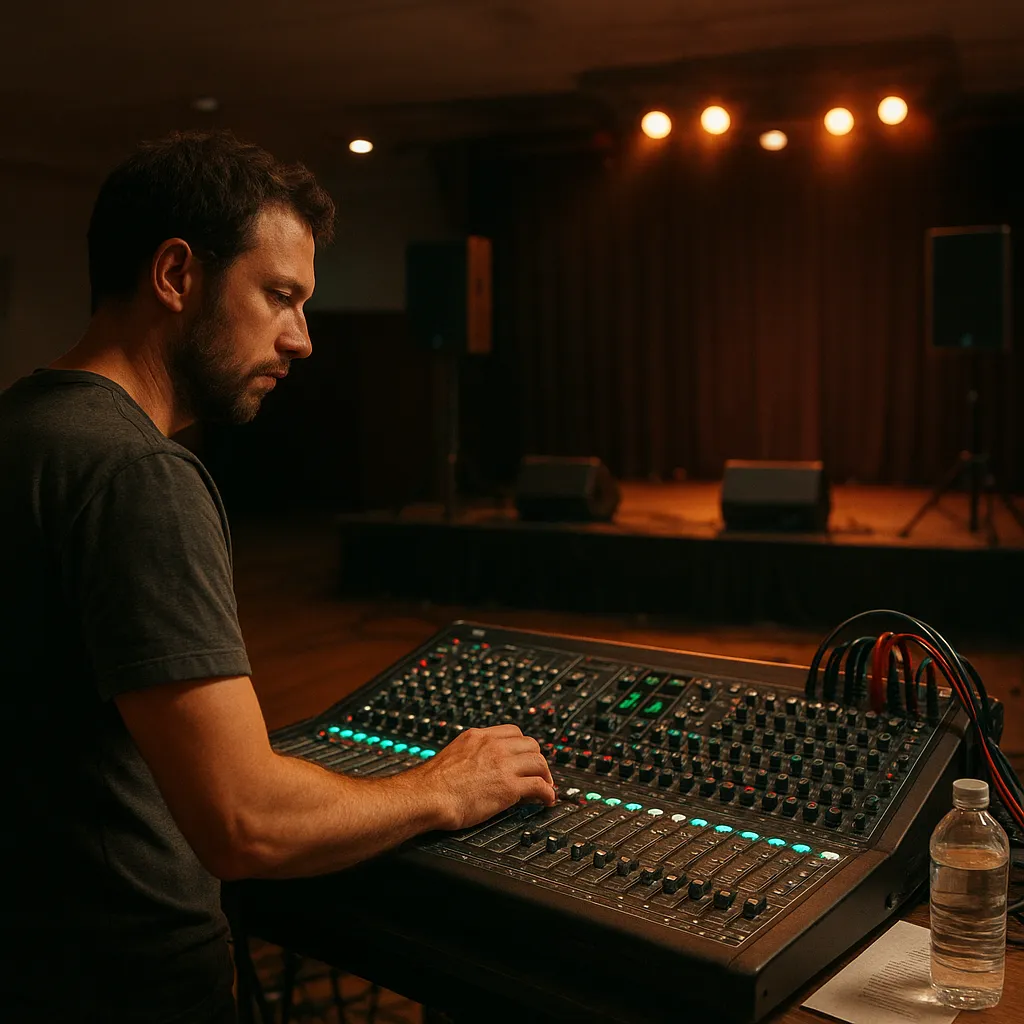
- At least four setups could fit the phrase “the venue has sound,” but just one is a PA for a band.
- Ask what the system is built for and who runs it, not whether it exists.
- Many venues own a good system and publish that bands must bring their own. This is standard practice, not an attempt to make things difficult.
- In some rooms, the house rig beats a band’s own gear when a real front-of-house operator runs it.
Someone at a venue often mentions “we have sound,” and the rest of the group agrees.
Tuscan Hall in Austin puts the difference in writing. Its in-house system is free and you can plug a laptop into it, but professional bands and DJs will need to bring their own sound systems. Both parts are true at the same time, and that line catches people off guard every time.
When a venue says it has a sound system, that does not mean a band may use it. Several Austin venues state that distinction in their published policies.
What is a house sound system?
A house system consists of audio gear owned by a venue and installed there permanently. PA stands for public address: a mixer, speakers and amps that bring live sound to a level the room can hear. Front of house means the spot in the audience area where someone controls the sound levels the audience hears. A venue can own that equipment without providing that mixing position, and that gap catches people.
“We have sound” might mean four things
| What it is | Good for | Will it run a band |
|---|---|---|
| Ceiling system | Background music, announcements, and speeches | No. Coverage is wrong, and headroom is usually insufficient |
| Device input | A phone or laptop playlist, or a ceremony track | No. It’s only a socket, not an actual system |
| Complete front-of-house sound rig | Live music, run by an actual person | Yes, and often better than a band’s own gear |
| A feed and power | A DJ sound system placed in the right spot | No. This is infrastructure for somebody else’s equipment |
Sometimes readers misread the fourth line. The Creek Haus in Dripping Springs states the property is wired for sound indoors, and there are plugs behind the ceremony trees that a DJ can use. That is genuinely useful information and it is not an offer of a band PA. The same spot also publishes a rule that all reception bands must get management sign-off first, a point worth raising early.
Why ceiling speakers are wrong for a dance floor
Cost is not the reason. What matters is what they are designed to do.
Ceiling speakers are designed to cover a space evenly at low volume, letting guests at opposite ends converse without shouting. That one purpose shapes every decision: compact drivers, broad dispersion, aimed straight down, and spaced across the entire ceiling.
A dance floor needs the opposite. Sound should face the dancers, with bass they can feel and music that seems to come from the stage. Those needs conflict, so a venue that says no is usually right about its system rather than being difficult.
When the venue’s rig wins
In some rooms, a proper front-of-house system comes with an engineer who knows it well. The engineer knows which spots in the room ring and where feedback starts. They know how the sound shifts as the room fills, too. A band playing there for the first time can’t learn all of that in one night. In those rooms, use the house system.
When the band’s PA wins
In any other case, it mainly comes down to taking away an unknown. When a band carries its own rig, it knows exactly what it has, has fixed every piece before, and won’t discover on the night that two channels are dead.
Four questions to ask your venue
- What’s the system designed for? Background music, speeches, or live performance.
- Who operates it? A staff engineer, anyone, or no one.
- What input does it take? A cable from a phone, or actual channels for microphones and instruments.
- May a band use it? Ask it in exactly those words. The answer is often no, even if the first three replies sounded good.
The cocktail space typically has its own room and sound coverage, so ask those same four questions about it separately. This is covered in cocktail hour music with a live band.
Our position on it
We haul a full PA and stage lighting to every show, so we can run a room of any size self-contained. If a venue has its own house production, we plug into it. Both options are standard. When there’s a real front-of-house system and an operator, that’s usually the better answer, and we’ll say so.
For other venue rules that often come up late, see what venues allow. For the remaining booking questions, see What to ask a band.
Our band's page shows which parts of an event we can cover. This question comes up most often for hotel ballrooms and conference spaces with their own AV; those spaces fit under corporate events and galas.
Common questions
Can the band use the venue’s sound system?
Sometimes, but ask directly. At least one Austin venue publishes that its in-house system is free for phone or laptop use, while professional bands and DJs must bring their own sound system.
What does “the venue is wired for sound” mean?
It usually means less than you’d expect. It might be ceiling speakers for background music, a device input, or only power and a feed where a DJ rig needs them. Only a full front-of-house system with channels for microphones and instruments will run a band.
If the venue already has a PA, should the band bring its own?
A band that carries its own rig removes an unknown when it brings the rig along. One exception exists: a room with a proper front-of-house setup and an operator who understands how that space behaves when full, where the house rig usually makes the better choice.
Sources
- Tuscan Hall, Austin, “FAQ”. “Our amazing in-house sound system is available to you at no extra charge at The Veranda Room. You are free to connect your iPod or laptop to it, but professional bands & DJs will need to bring their own sound systems.” Read July 27, 2026. tuscanhall.com
- The Creek Haus, Dripping Springs, “FAQ”. Published policy states that the indoor space is wired for sound, with plugs behind the ceremony trees for a DJ; management must approve all reception bands in advance; and soloists and non-amplified musicians may perform at the ceremony. Read July 27, 2026. thecreekhaus.com
- The Knot, “36 Questions to Ask a Wedding Band That You Don’t Want to Forget”. This standard industry checklist asks whether you need to rent equipment for the performers. It never asks whether the band may use the venue’s own system. Read July 27, 2026. theknot.com
- Mae’s Ridge, Dripping Springs, FAQ. Under the venue’s published policies, standard pricing covers one hour of breakdown once the event ends, and every further hour runs $300. That per-hour figure is the cost of a longer equipment strike. Read July 27, 2026. maesridge.com
- Reventals, “Stage Dimensions Guide for Events”. Published stage dimensions change according to group size, treating the platform as the variable; the audio source is not mentioned. Accessed July 27, 2026. reventals.com